Overview
PROBLEM Decluttering sounds simple…until you try to do it.
Despite good intentions, decluttering often becomes overwhelming. People don’t know where to start, how long it will take, or how to stay consistent. Projects begin with motivation and end in half-sorted piles.
Most online resources treat it as either an aesthetic aspiration or a static checklist. They lack pacing, personalization, ways to track progress and support for the emotional toll of the process.
OPPORTUNITY Create a mobile-first platform that acts as a companion for different decluttering scenarios, such as moving, spring cleaning, habit-building, or life transitions.
SOLUTION A personalized decluttering platform that:
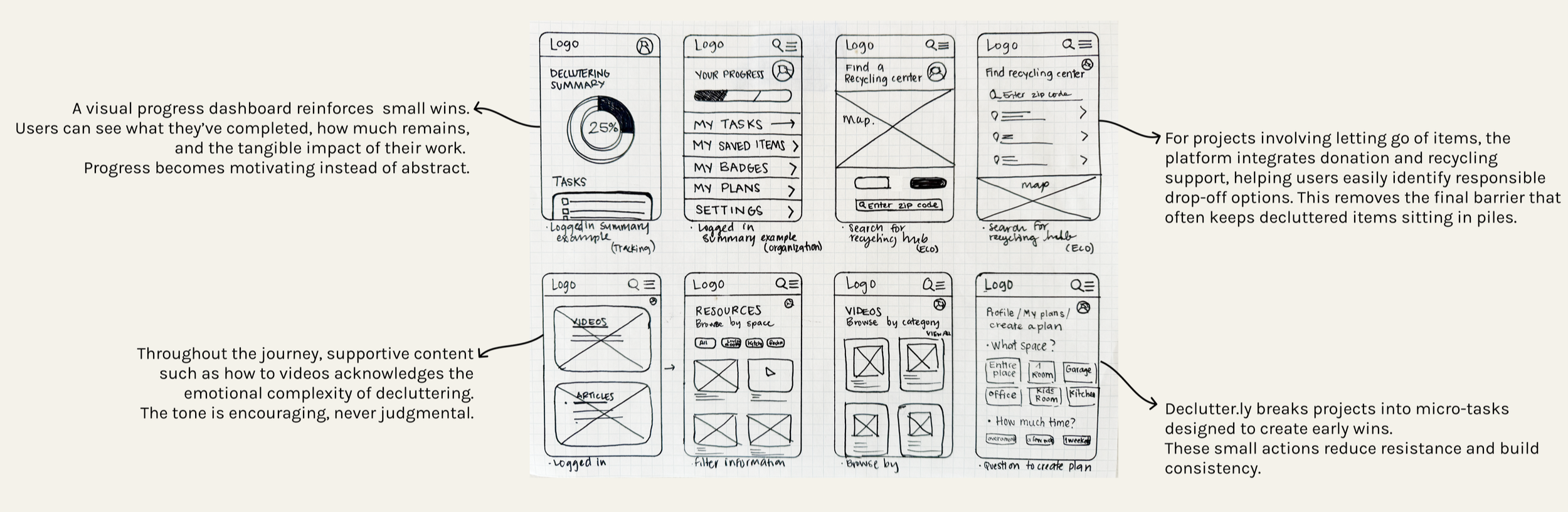
Generates tailored decluttering plans
Supports for the emotional process
Provides smart donation and recycling locators
Breaks tasks into manageable steps
Tracks progress with motivating milestones
DURATION 6 weeks
ROLE End-to-end UX/UI Designer (research, strategy, wire-framing, UI, testing)
Research
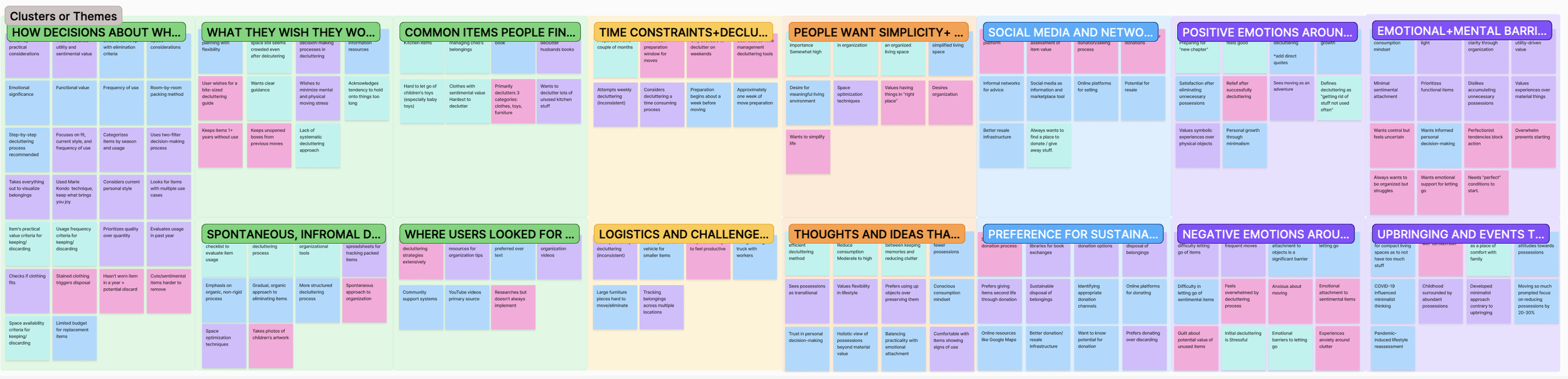
Through interviews and research synthesis, I uncovered recurring themes across different decluttering scenarios.
Whether someone was preparing for a move or simply tackling a cluttered closet, the emotional patterns were similar.
GOALS
Understand emotional and logistical barriers to decluttering
Identify how users currently organize or attempt to declutter
Explore sustainability behaviors tied to item disposal
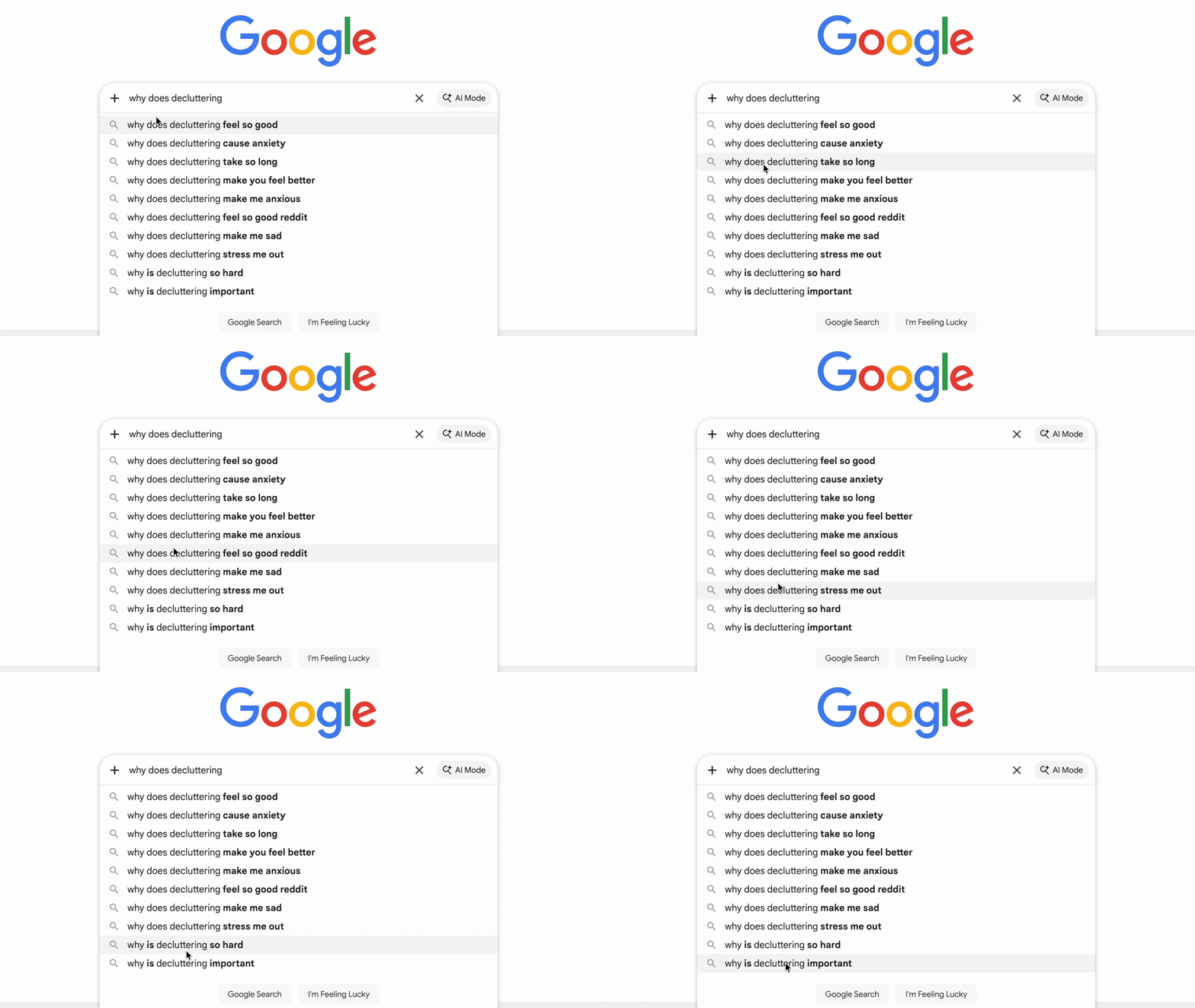
Across the board people experienced decision fatigue quickly.
They underestimated the time required. They felt guilt around letting go of items. And they often abandoned the process midway because the scope felt too large.
DECLUTTERING SCENARIOS
Busy professional with limited time
User struggling with sentimental attachment
Frequent mover prioritizing sustainability
User overwhelmed by lack of structure
Define
Research synthesis confirmed that decluttering can be an emotional journey that moves through cycles. Designing for that emotional rhythm became central to the experience.
Declutter.ly would not be just a checklist. It would act as a structured, personalized decluttering companion adaptable to multiple contexts:
Preparing for a move
Seasonal or spring cleaning
Downsizing
General home reset projects
Post-life-transition reorganizing
Instead of designing for a single scenario, I focused on creating a flexible system that adjusts to the user’s goal.
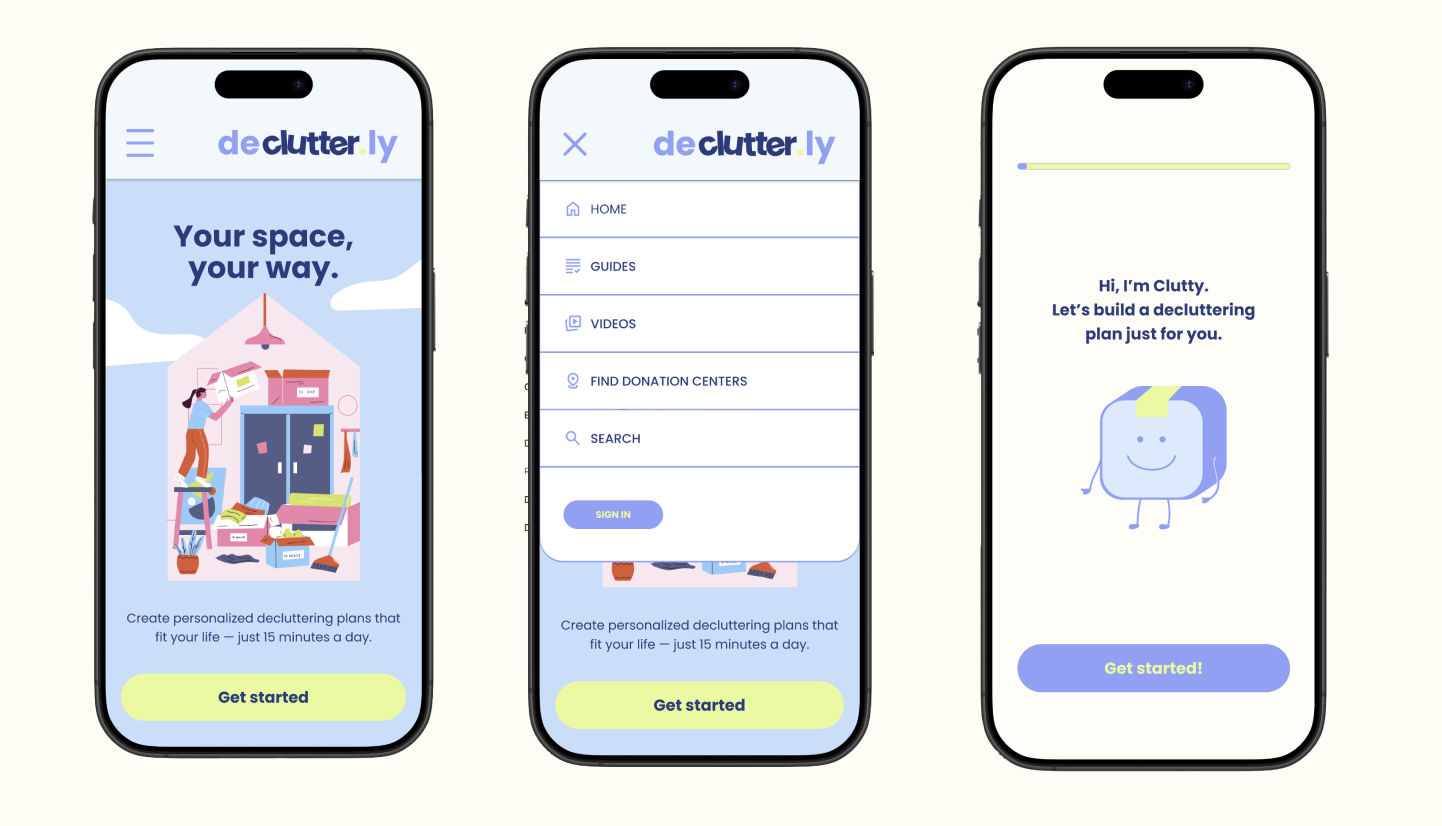
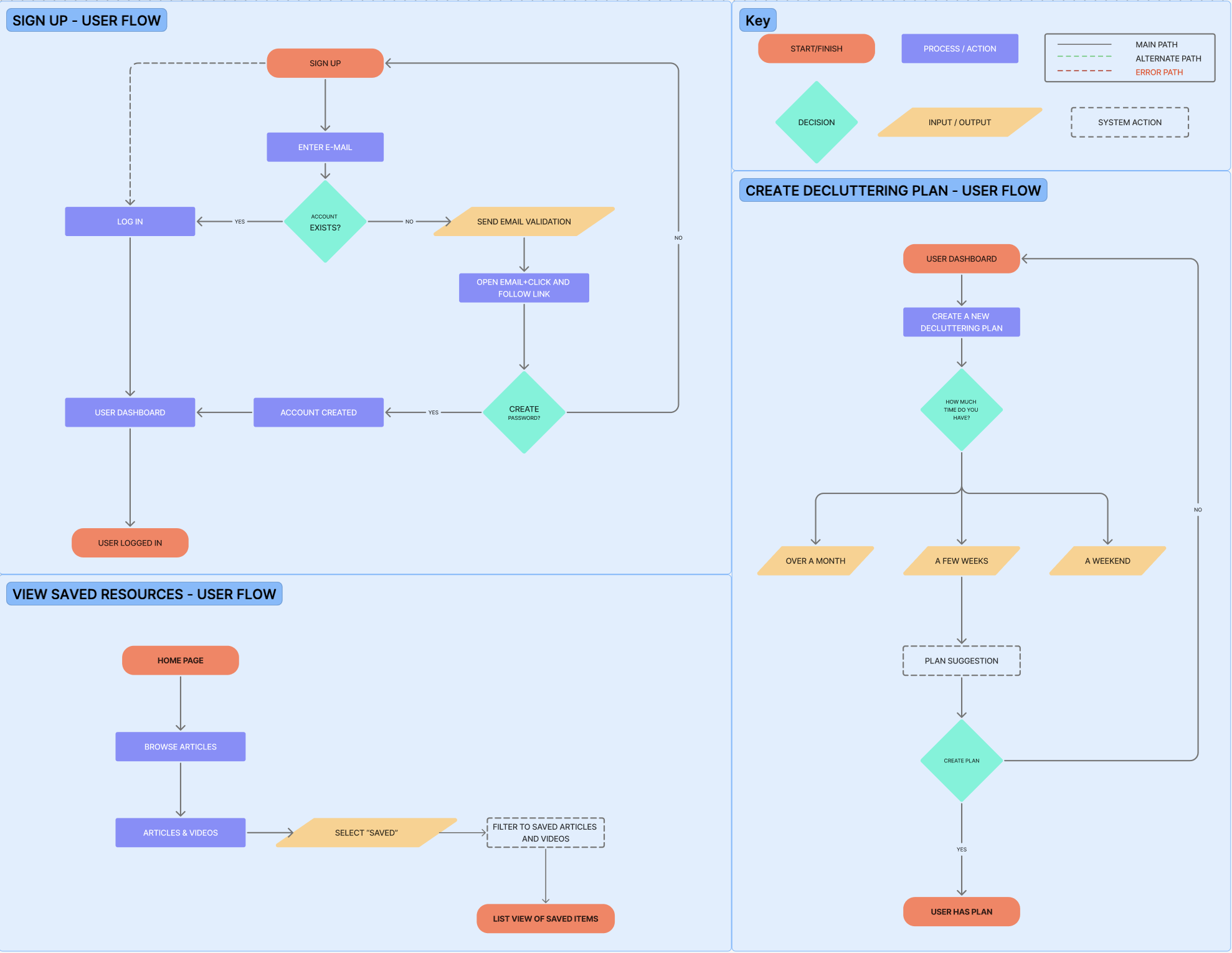
The experience begins by asking what type of decluttering project the user is undertaking. Based on their timeline, home size, and available time, the app generates a personalized plan that feels realistic and manageable.
Design
The visual direction reflects calm and clarity. Cool tones, clean typography, and generous spacing create a sense of order. Friendly illustrations add warmth and approachability.
The goal was not to design a sterile productivity tool, but a supportive companion — something that feels steady and reassuring during moments of transition.